
 by Scott Laird
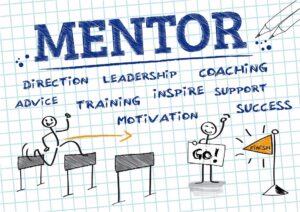 “And the things you have heard me say in the presence of many witnesses entrust to reliable people who will also be qualified to teach others.” (2 Timothy 2:2, NIV) Four spiritual generations: Paul, Timothy, reliable people, and others. Four generations that have been taught and mentored in the Lord. This is a high calling, but it is essential as we seek to equip the church beyond one generation. Instead, we prepare God’s people to multiply our impact for the kingdom of God.
I have served with the Great Falls Church of Christ in Great Falls, Montana, for over thirty-one years. During my tenure, we have worked with nine individuals and families using a two-year apprenticeship program designed to equip people for the rigors of ministry. Our last two apprentices have been bi-vocational and have been identified from within our congregation. These two apprentices were prepared for this step because they were first mentored as members of the local body. Mentoring is not for supported ministers only; it is crucial for the entire church.
I watch, pray, and attempt to discern who to approach to mentor. Once a brother is identified, I invite him to join me on numerous ministry adventures. These often include hospital visits, Bible studies (personal and teaching classes), elders’ meetings, or anything else that is appropriate. Let me use hospital visits as an example. We travel together, and on the way, our conversation prepares him for what to expect. During the first few outings, the person I mentor observes. He can add to the discussion if he wants, but there is no expectation of him taking the lead. On the way home, we debrief and pray about what we just did and observed.
About the third or fourth time we go on a hospital visit, I encourage him to participate in some way. Again, we debrief on the way home. Once he has had about five visits under his belt, I ask him to take point on the visit. We still travel together and join in the visit, but he has the leading role. As always, we debrief on the way home. Once he has led, with me in a supporting role, it is time for him to go out on his own and invite someone to join him and repeat the process. This movement gets us to the third generation and is an important step for mentoring to become part of the church’s DNA.
A principle from The Leadership Baton speaks to the importance of mentoring being modeled by the existing leadership:
For mentoring to be ingrained in the culture of the church, it must begin with the senior pastor. Since other leaders tend to pattern their way of doing ministry after the examples of those who lead them, unless the senior pastor makes mentoring a priority, it never becomes a core value in the church’s culture.
. . . this value is especially critical in churches that give preference to a strategy of leadership development over one of leadership acquisition. (Rowland Forman, Jeff Jones, and Bruce Miller, The Leadership Baton: An Intentional Strategy for Developing Leaders in Your Church an Intentional Strategy for Developing Leaders in Your Church (Grand Rapids: Zondervan, 2004), 167.)
My experience is that I typically learn the most when I mentor others. People I work with ask questions that force me to re-evaluate what, how, and why I do things. Sometimes the mentee has a new insight that improves the encounter. Often, the person you are working with will run into something new or especially challenging, which makes it important to continue to debrief and encourage on an ongoing basis.
Mentoring reflects the ministry of Jesus. “Jesus went up on a mountainside and called to him those he wanted, and they came to him. He appointed twelve that they might be with him and that he might send them out to preach.” (Mark 3:13–14, NIV) Jesus called the disciples, spent time with them first, and then he sent them out. A common struggle with bringing people along to mentor is that the work one does with them takes more time in the beginning. However, the fruit of this investment is that ministry expands as more brothers and sisters begin to discover their gifts and are equipped for the work God has called them to do.
May the Lord give us a vision to equip four generations for the kingdom of God.
About the Author
Scott Laird became a Christian through the campus ministry at Montana State University in Bozeman, MT in 1978. There he met his wife of forty-four years, Patty. They have two children and four grandchildren.
Scott has been supported in ministry for over forty-three years. Scott and Patty were missionaries to Canada for twelve years before moving back to Montana to serve as the evangelist for the Great Falls Church of Christ. Scott began his thirty-first year of ministry in Great Falls on November 1, 2025, where he now serves in a part-time capacity having handed the preaching role off to Matt Burleson on June 30th, 2024. The community of Great Falls is home to Malmstrom Air Force Base, making for a very transitory church. Since beginning this work in 1994, Scott has helped the church send over 850 individuals into ministry opportunities in the United States and around the world. Currently, the church has an average in person attendance of about 200.
Outside of the traditional roles of preaching and teaching, Scott invests in the wellbeing and unity of the churches in the northwestern plains of the United States and Canada as a consultant and leader. Beginning July 1, 2025, Scott began to serve as the Co-Executive Director for the Kite Center for Ministry out of York University in York, NE. This work is meant to equip and encourage small and rural churches in the Midwest, Norther Plains, and Rocky Mountain regions. These opportunities enable Scott to use his primary gifts of leadership, discipleship, evangelism, and small groups.
Leave a Reply