
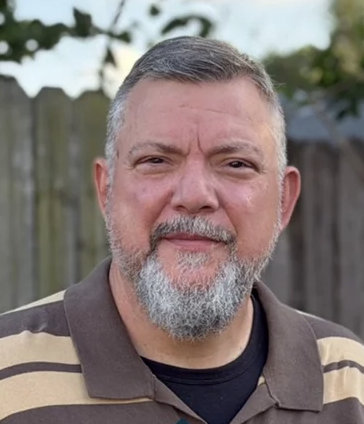
 by George Welty
 As it turns out, the New Testament gives surprisingly little detail about the mechanics of Christian assemblies, and that silence is actually a gift. It means church leaders have room to shape worship gatherings in ways that genuinely help people draw near to God, grow together, and leave changed. That freedom invites us to think more deeply about what our gatherings are meant to do: to form disciples. As we think through our worship assemblies, we should ask not just how to produce them, but how to design them so they form people more fully into the image of Christ.
Think Intentionality
One of the biggest problems in worship planning is how little planning sometimes goes into the worship experience itself. A song leader may know the sermon topic a few days or five minutes before service starts, while the preacher has spent twenty hours preparing the sermon. That imbalance suggests we treat the sermon as the whole event and everything else as filler. But worship is not a lecture with warm-up music attached.
Think Thematically
When a worship service has a clear theme, people are more likely to remember it, feel it, and participate in it. The theme does not need to be trendy or overly clever. It just needs to be coherent. Every element in the service should reinforce the same spiritual idea, so the congregation is not mentally bouncing in ten different directions.
This is where planning becomes more than administration; it becomes formation. If the message is about repentance, the music should not only be upbeat but also thoughtful enough to support reflection. If the service centers on praise, the prayers and readings should echo that focus. Thematic worship helps the whole gathering speak with one voice. Otherwise, the service can feel like a spiritual buffet where everything is available, but nothing tastes like it belongs on the same plate.
Think Collaboratively
Good worship does not happen by accident, and it definitely does not happen when one exhausted person tries to carry the whole thing alone. A worship planning team can bring together the preacher, worship leader, and other lay leaders who think carefully about formation. Planning ahead allows the service to be shaped rather than stitched together at the last minute.
Collaboration also reduces the common mistake of treating worship as the preacher’s job or the worship leader’s job. Worship is the work of the whole church. When different leaders contribute their gifts early in the process, the gathering becomes more thoughtful and more unified. When more voices are invited into the planning process, the result is often better ideas, deeper insight, and a worship experience that connects with more kinds of people.
Think Pedagogically
People do not all learn in the same way, and worship should reflect that reality. When I was training to be a teacher, I was introduced to Howard Gardner’s theory of multiple intelligences. I learned that people absorb information through different strengths: language, music, visuals, movement, relationships, and more. Many churches still speak mainly to one or two of those learning styles, then wonder why some people seem spiritually disengaged.
A helpful framework here is Leonard Sweet’s E.P.I.C. model: experiential, participatory, image-rich, and connective. In plain terms, worship should not only tell the truth; it should help people experience it, participate in it, visualize it, and connect it to life. A teacher on the planning team can be a valuable resource because teachers are trained to think about sticky learning. That shift matters. Worship should not merely inform the mind; it should shape the whole person.
Think Immersively
Worship can also be more immersive. That does not mean turning church into a stage production with fog machines and emotional manipulation. It means thinking carefully about how all the senses can be brought into the act of worship. Music, poetry, silence, visual arts, movement, and video can all help people pay attention and engage more deeply.
When used simply and wisely, creative elements do not distract from worship; they deepen it. A well-placed image, a thoughtful reading, or a moment of silence can be so much more meaningful than a straightforward approach. The goal is not novelty for its own sake. It is to help people inhabit the truth rather than merely hear about it.
Several times in his letters, Paul emphasizes that the purpose of the assembly is edification, the building up of the body. That should reframe how churches think about worship environments. The gathering is not the only thing the church does, and it cannot carry the entire weight of Christian life. But it can be a powerful tool for forming people into the likeness of Christ.
One of my favorite restaurants in St. Petersburg is called Stone Soup Café. One time, the owner told me that he only had to deliver on one thing… the soup, because it was in the name of the restaurant. Similarly, we have a single job in church. For people to deeply understand and then embody union with Christ. If churches want their weekly assemblies to matter, they must treat it as more than mere routine. They should plan with purpose, unity, collaboration, and care for how people learn and encounter God. The best worship gatherings do not just fill time before lunch. They help build the kingdom on earth as it is in heaven.
About the Author
George Welty has spent thirty years serving as a teacher, coach, minister, photographer, storyteller, and spiritual director, with a deep heart for ministry and formation. He is a D.Min. student at Lipscomb University and is passionate about exploring the beauty of God’s story and inviting the curious into the adventure of faith.
Leave a Reply