
 by Jon Anderson
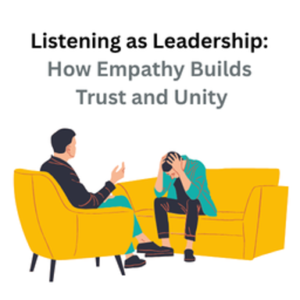 One of my first clients, while doing my internship for my graduate degree in Marriage and Family Therapy, was a guy whose wife had left him for another man. His response was to spend every free moment from work, night and day, stalking her. This went on for several weeks so she filed a restraining order on him which said he couldn’t be within 1,000 feet from the apartment where she was living with the other man. He broke this restraining order every day. He would go straight from work and park in front of the apartment until it was time to go back to work the next day. He was arrested twice for breaking the restraining order. The second time the judge ordered him to get therapy. That’s where I came in.
For about two months I tried everything I knew to help him change his behavior. Every week, at my supervision meetings, I would bring up his case with my professors and they would give me their input. But he continued going to her apartment every night. One day the judge called me, asking if he had been coming to therapy because the police told him he hadn’t stopped. As someone who had just begun my career as a therapist, I felt like a complete failure.
A year before we started seeing clients, we had to take a class called Internship I. Pretty much all we did, the entire semester in that class, was take turns listening to each other and practicing empathy. At the time I thought this was a colossal waste. I thought we should be focused on learning how to give helpful advice. But it was drilled into our heads that this is the most important part of therapy.
During those first eight weeks with my client, I would begin the sessions by doing my best to be empathetic. But at some point in the session, I would switch to strategies and advice, not realizing that the empathy part was having far more positive impact than the advice and behavior modification suggestions. The next session, after receiving the phone call from the judge, I decided that I was out of ideas and to just resort to my basic training…empathy. So, I asked him a question: “What, if anything, is helping you from meeting with me?”
“I don’t know,” he replied, “but it makes me feel better about myself because you understand how I’m feeling.”
He continued: “Everyone is saying I’m sick. Do you think I’m sick?”
I replied, “I can’t imagine what it feels like to have my wife leave me for someone else, but it seems like it would be the worst pain in the world. So, no, I don’t think you’re sick for having the feelings and thoughts you are having. In fact, I think it would be unhealthy if you were NOT having those feelings! I just think how you’re acting upon those feelings isn’t a healthy way to handle them.”
The next week he came to session number nine, or so. I was dreading it because meeting with him made me feel like a failure. I started out with my usual, “How did it go this past week”? Up until this meeting the answer was always the same: “I went to her apartment, all night, every night this past week.”
But this time he answered: “I didn’t go over there a single time this week.”
“What did you do instead,” I asked.
“I sent my mother home, when I got off from work, and spent time with our boys.”
“What changed?” I asked.
“Well, you said what I was doing wasn’t healthy. I didn’t think what I was doing was sick. I thought it was how anyone would react to the situation. I don’t want to be sick. So, I stopped doing it.”
When we don’t think our emotions (how we are feeling) are valid, we feel crazy. When we feel crazy we do crazy stuff. When someone validates our feelings, we feel less crazy and we do less crazy stuff!
Empathy has been getting a bad rap as more and more of us are believing an ungodly lie… that it is weakness. But, I would strongly argue that it is Jesus’ greatest strength! It was the act of love He employed over and over again, gaining followers and changing lives, as we read through the Gospels.
I am very thankful that I learned this earlier than later in my career. If I wrote the best-selling marriage book of all time, and someone comes to me for help because they read my book, they still are not going to trust my help until they first feel understood by me. My friends won’t become truly close friends if they don’t think I “get them.” My children aren’t looking for my advice as much as they are seeking understanding from me. My coworkers and employees don’t want to cooperate with someone who doesn’t understand me. And, maybe most importantly, my spouse doesn’t want my opinion near as much as she craves my validation for her feelings.
About the Author
Jon earned his Master’s degree, in Marriage and Family Therapy, from Abilene Christian University. Jon’s passion is to promote healthy marriage and to equip churches to minister effectively to marriages. He founded Growing Love Network and has worked with thousands of couples and individuals through counseling and therapy. Through GLN, he and his wife, Joanna, have led more than 160 workshops around the nation for struggling marriages, Love Reboot. In addition, Jon has worked with numerous churches to help them develop more effective marriage ministries, and conducting his marriage retreat, My Love Lasts.
He has trained more than 200 couples to lead marriage courses and has developed a curriculum – Growing Love – which is useful in various settings such as: bible classes, home studies, as a mentoring tool and with a counselor or therapist. He is also the author of The Acceptance: What Brings and Keeps Lifelong Love, and 365 Days of Growing Love.
Leave a Reply