
 by Jason Locke
 For a long season, many Christians reduced evangelism to a decision. The strategies behind such evangelism were often about what was needed for someone to commit to Jesus. For some evangelicals, this involved taking a person through the Roman Road or the Four Spiritual Laws. For others using the Jule Miller filmstrips or Evangelism Explosion, the goal was to reach a point where you could ask, “Do you know where you will spend eternity?”
In my opinion, these strategies were always based on a flawed view of evangelism. By good fortune, I suppose, we lived in a so-called Christian culture where people tolerated and even expected evangelistic techniques that reduced the gospel to decision-making. So where the methods may have lacked a robust biblical understanding of the gospel, our highly Christianized society often responded favorably anyway.
Our world has changed. Even church folks tend to view the world through highly secularized lenses. And thanks to societal shifts and major scandals that erode trust in institutions, most folks no longer view the church favorably. Non-church-goers aren’t easily scared or manipulated into “getting their lives right with God,” even if they believe in a God who is relevant and relatable. It’s hard to argue against statistics that show a huge drop in church participation and belief. Some can look through the tea leaves and try to find a resurgence of faith in North America, but the anecdotal evidence isn’t backed up much by data.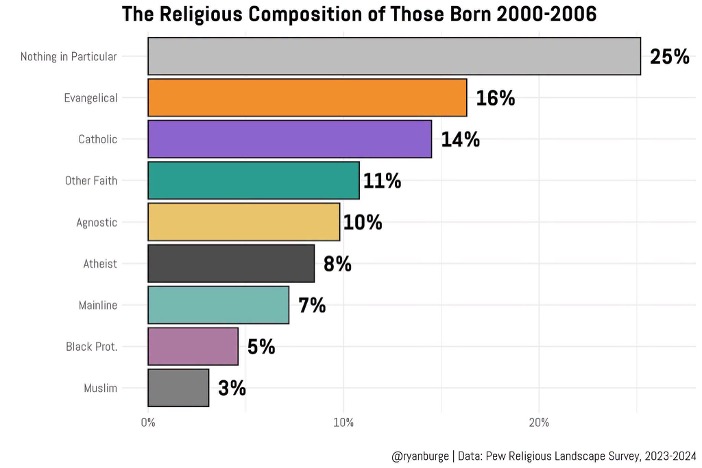
So am I saying that evangelism is unimportant? Should it be cast aside because our evangelistic methods work infrequently? Does a changing world mean that we should be embarrassed to share the good news of Jesus with our friends, family, and neighbors? All this depends on how we define evangelism.
David Bosch was a well-respected South African missiologist. In his writings about Christian mission and evangelism, he once defined evangelism this way: “Evangelism is the core, heart, or center of mission [italics author’s]; it consists in the proclamation of salvation in Christ to nonbelievers, in announcing forgiveness of sins, in calling people to repentance and faith in Christ, in inviting them to become living members of Christ’s earthly community and to begin a life in the power of the Holy Spirit” (International Bulletin of Missionary Research 10, 1987: 98-103). Note how comprehensive this definition is. It’s centered on the good news of Jesus and on so much more than simply making a decision to follow Christ.
In his 1989 book The Logic of Evangelism, the former Perkins School of Theology professor William Abraham suggests Christians should view evangelism as about inviting people toward and into the kingdom of God. Again, this is about more than baptism. This is about walking alongside people as they explore the meaning of their own lives, and in so doing, to nudge and invite them to encounter Jesus and his people.
Evangelism has to start with where a person is, not with where we want them to go. The theologian and pastor Francis Shaeffer was once asked what he would do if he had one hour with a non-Christian. He supposedly replied, “I’d listen for fifty-five minutes. Then perhaps, in the last five minutes, I’d have something to say.”
Jesus models a kind of evangelism that would be foreign to many Christians today. While he clearly wants God’s kingdom to come, he is willing to let people dictate what they want from him, not the other way around. Jesus asks the blind man, “What do you want me to do for you?” (Mark 10:51). When a lawyer comes to Jesus and asks how to inherit eternal life, we might expect Jesus to whip out a five-fold plan of salvation or seize the moment to force a decision. Instead, Jesus responds with a question, “You tell me: what is written in the law? What do you read there?” (Luke 10:26).
- Good evangelism isn’t an all-or-nothing endeavor. It’s not about forcing someone to decide. Evangelism is about helping someone find the next step to draw nearer to Jesus. Sometimes this involves talking about sin and forgiveness. Sometimes it simply involves listening or sharing stories. Good evangelism is a multi-faceted journey.
- Effective evangelism takes time. You’re not a lone ranger with one bullet to fire. God has lots of people involved in his good work. Play your part and trust God to provide the next step.
I wish that all Christians would once again see the value of evangelism. But I fear this won’t happen until we start to understand what good evangelism looks like today. People need good news. Will you invest the necessary energy and time to figure out exactly what kind of good news people are looking for and then pray about how Jesus can be the answer?
About the Author
Jason Locke has preached for the College Church of Christ in Fresno, California since 2009. His adventure in full-time ministry began in 1994. He worked first as a church planter in Prague, Czechia, and later as a campus minister at West Virginia University.
Jason’s Doctor of Ministry and Master of Divinity degrees are from Abilene Christian, but he did his undergraduate work at Tennessee Tech in mechanical engineering. His current areas of interest are congregational renewal and adaptive leadership, and he has led his church in Fresno through a remarkable journey of transformation.
Jason is a curious adventurer and an avid reader who loves to travel, cook, and follow his favorite sports teams. He has been married to Julie since 1992. They have two married sons and are proud grandparents.
Leave a Reply